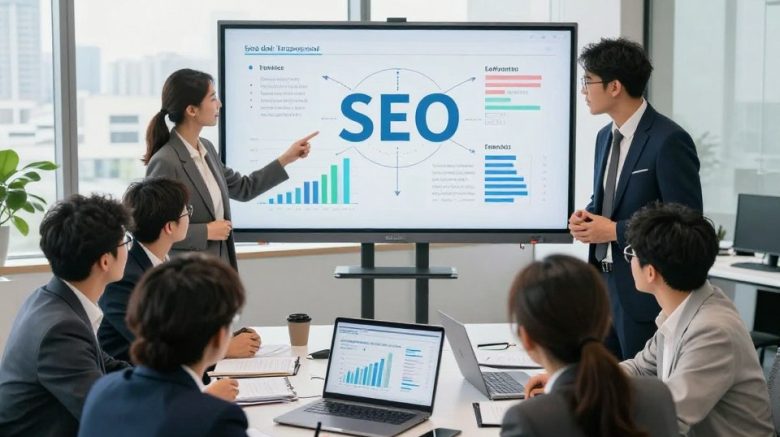
Digital Web Marketing is a must for U.S. businesses looking to grow visibility online and achieve trackable growth. This article explains how focused online marketing methods improve visibility, customer acquisition, and retention across local and national markets.
Marketing 1on1 integrates SEO company Dayton and paid media to offer tailored packages—Starter, Business, and Ultimate tiers—that align with different levels of competition and growth goals, and a strategy that focuses on clear performance metrics such as site traffic, conversions, search rankings, engagement rates, and return on investment.
Readers will find practical channel guidance, tactical recommendations, and a method for choosing an SEO package based on market competition and objectives.|This article provides practical channel guidance, tactical best practices, and a clear framework for choosing an SEO package based on competitive level and goals. The article targets business decision-makers and students seeking research-informed explanations of digital marketing US tactics and implementation.
Digital Web Marketing Explained: Why It Matters for US Businesses
Digital web marketing refers to the practice of using online channels and technologies to attract, engage, convert, and retain customers. It relies on websites, search engines, social platforms, email, paid ads, and analytics.|Digital web marketing uses online channels and technologies to attract, engage, convert, and retain customers—centered on websites, search, social, email, paid ads, and analytics. A clear definition separates inbound tactics like SEO and content from outbound tactics such as paid search and display.
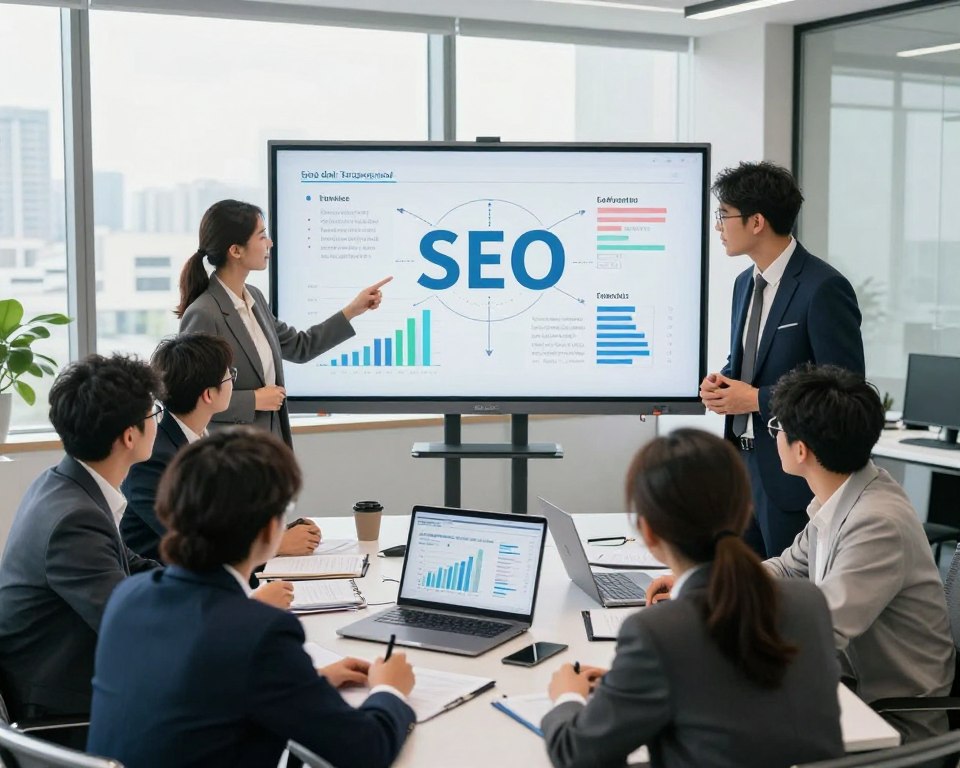
Defining Key Digital Channels and Tactics
Inbound methods drive organic discovery through content, links, and on-site technical SEO. Outbound methods deliver immediate visibility with paid search and display.|Inbound approaches create organic discovery through content, links, and technical SEO, while outbound methods provide immediate visibility via paid search and display. Both routes point back to the website, which serves as the central conversion hub for leads, purchases, and sign-ups.
Strong strategies combine organic and paid efforts.|Strong strategies integrate organic and paid channels. SEO and content reduce long-term customer acquisition cost. Paid channels support deadline-driven promotions and new product launches.
US Market Trends and User Behavior Today
US market digital trends show a clear mobile-first shift, with voice search and e-commerce growth shaping how businesses connect with buyers.|U.S. buyers are increasingly mobile-first, and voice search plus e-commerce growth now shape how businesses connect with buyers. Social platforms such as Facebook, Instagram, LinkedIn, and TikTok take a larger share of consumer attention each year.
Modern consumer behavior demands fast pages, secure checkout, and personalized experiences.|Buyers expect fast-loading pages, secure checkout, and tailored experiences. Local details like hours, address, and reviews shape purchase decisions for in-store visits and services.
Privacy expectations are rising alongside stricter rules for cookies and data collection.|As data rules tighten, privacy expectations rise and brands pivot to first-party data strategies to preserve targeting accuracy and measurement. Brands pivot to first-party data strategies to preserve targeting accuracy and measurement.
Why an Integrated Digital Strategy Helps Locally and Nationally
An integrated digital strategy aligns SEO, paid media, social, and email to create consistent interactions across the customer journey.|When channels work together, the result is consistent touchpoints across the customer journey. This coordination boosts campaign efficiency and reinforces brand messages throughout each stage.
Local versus national marketing demands distinct approaches.|Local and national strategies differ. Local efforts focus on citations, local SEO, and targeted ads to drive foot traffic and calls. National campaigns build broad awareness, build long-term organic authority, and support demand generation across regions.
Unified measurement with cross-channel attribution and dashboards helps teams reallocate budgets based on performance.|Unified dashboards and attribution improve measurement, helping teams reallocate budgets based on performance. Combining organic and paid channels cuts long-term acquisition costs while maintaining the agility to win in short-term searches and promotions.
Digital Channels That Help Expand Online Presence
A smart mix of channels creates a durable digital footprint. Each channel plays a distinct role in acquisition, engagement, and retention.|A strong digital footprint comes from a focused channel mix, with each channel supporting acquisition, engagement, and retention. This outline shows practical steps to apply search, paid, social, and email tactics in concert for measurable growth.
Search engine optimization (SEO) fundamentals
Start with keyword research aligned to user intent and business goals.|Start by identifying keywords that match user intent and business goals. Optimize title tags, meta descriptions, and header tags for clarity and relevance. Use internal linking to guide crawlers and distribute authority across pages.
Produce content that answers common queries and adds real value.|Publish content that answers common questions and provides real value. Build quality backlinks from reputable sites and manage local signals like Google Business Profile and consistent NAP for city-level visibility.
Monitor ranking signals such as mobile usability, page speed, content quality, backlinks, and user engagement metrics.|Review mobile usability, page speed, content quality, backlink strength, and engagement metrics that influence rankings. Regular audits help prioritize fixes that lift organic performance.
Paid search and PPC strategies for rapid visibility
Deploy search ads on Google Ads and Microsoft Ads to capture high-intent queries immediately.|Search ads on Google and Microsoft capture high-intent queries immediately. Complement search with display and retargeting to maintain audience recall and recover abandoned prospects.
Test match types, set bid strategies that reflect margin and lifetime value, and enable conversion tracking to measure ROI.|Trial different match types, set bids based on margin and lifetime value, and enable conversion tracking to measure ROI. Align landing pages with ad messaging and run A/B tests on copy and layout for better conversions.
Leverage audience signals and remarketing lists to refine bids.|Leverage remarketing lists to refine bids and prioritise higher-value clicks. Automated bidding can help scale when paired with clean conversion data and guardrails.
Social media marketing to build engagement and brand awareness
Pick platforms by audience: LinkedIn suits B2B, Instagram and Facebook fit many B2C categories, TikTok reaches younger cohorts.|Choose platforms based on your audience: LinkedIn for B2B, Instagram and Facebook for many B2C categories, and TikTok for younger cohorts. Tailor content format and tone to each channel.
Build a content mix of educational posts, short-form video, and user-generated content to keep feeds fresh.|Keep content fresh with a mix of educational posts, short-form video, and user-generated content. Use paid social to amplify high-performing posts and to target segmented audiences precisely.
Maintain active community management and social listening to surface feedback and trends.|Practise social listening plus community management to uncover feedback and trends. Track engagement rate, reach, and CTR to refine creative and publishing cadence.
Email marketing and marketing automation for retention
Segment lists by behavior and demographics to send targeted messages.|Segment your list by behaviour and demographics to send targeted messages. Implement drip campaigns and lifecycle flows to nurture leads and reduce churn.
Personalise subject lines and content to improve open and click-through rates.|Personalize subject lines and content to improve opens and click-throughs. Measure open rate, click-through rate, conversion rate, and revenue per recipient to evaluate impact.
Connect email automation with CRM and analytics for behavior-driven triggers and closed-loop measurement.|Link email automation to CRM and analytics for behaviour-driven triggers and closed-loop measurement. This connection enables precise attribution and smarter follow-up.
| Channel | Primary Goal | Key Tactics | Core Metrics |
|---|---|---|---|
| Organic Search | Sustained visibility and trust | Keyword research, on-page optimisation, backlinks, local listings | Organic traffic, rankings, CTR, conversions |
| PPC / Paid Search | Rapid visibility and conversions | Search ads, display, remarketing, tracking | Impressions, CPC, CPA, return on ad spend |
| Social Media Marketing | Engagement and brand visibility | Platform-tailored content, paid amplification, community management | Engagement, reach, CTR, follower growth |
| Email and Automation | Retention and lifetime value | Segmentation, drip flows, personalisation, CRM integration | Open rate, click-through rate, conversion rate, revenue per recipient |
Content and Technical Practices That Improve Conversions
Strong digital marketing combines strong content strategy with reliable technical foundations.|To increase conversions, digital marketing needs to blend content strategy with technical foundations. This section outlines which content types drive conversions and which on-page SEO and technical SEO steps protect traffic and improve outcomes.
Content types that perform: blog posts, videos, and landing pages
Educational blog posts build top-of-funnel awareness and support long-term audience growth.|Educational blog posts build top-of-funnel awareness and long-term audience growth. Use search volume and CTR data to pick topics that improve blog performance. Map posts to the buyer journey so each article has a clear next step.
Video marketing raises engagement and retention.|Video marketing can boost engagement and retention. Short explainer videos, customer testimonials, and webinar clips raise time on page and social sharing. Repurpose videos into transcripts, infographics, and social snippets to extend reach.
Dedicated landing pages convert intent into action.|Focused landing pages convert intent into action. Apply landing page optimization by matching ad copy, headlines, and CTAs to user search intent. Keep forms short and place calls to action above the fold for higher completion rates.
On-Page SEO and UX Optimisations
A clear H1 and H2 structure helps readers and search engines understand page purpose.|Clear heading structure helps both users and search engines understand page purpose. Write readable URLs, optimized meta tags, and descriptive image alt text to support discoverability. Place actionable CTAs where users see them first.
User experience influences SEO via engagement signals. Intuitive navigation lowers bounce rates. Improved dwell time increases perceived relevance. Design clear conversion paths to increase form fills and purchases.
Accessibility and readability widen audience reach. Use plain language, adequate contrast, and responsive typography. These changes improve both user satisfaction and on-page SEO performance.
Technical SEO essentials: site speed, mobile-first, structured data
Site speed impacts users and rankings. Compress images, enable browser caching, and minimize JavaScript and CSS to cut load times. Use a CDN for geographically distributed audiences to further reduce latency.
Mobile-first indexing requires Google uses the mobile version for ranking and indexing.|Google now ranks using the mobile version, your mobile experience must be strong. Implement responsive design, touch-friendly elements, and fast mobile performance to meet modern expectations.
Schema.org structured data enhances listings with rich snippets and local business details.|Implementing structured data can enhance listings with rich snippets and local business details. Proper markup can increase visibility and CTR. Run regular technical audits to find crawl errors, broken links, and indexing issues before they affect traffic.
| Focus Area | Key Actions | Expected Impact |
|---|---|---|
| Content Planning | Map topics, use search data, repurpose multimedia | Higher reach, better blog performance, stronger lead flow |
| Video marketing | Produce short videos, embed on pages, transcribe content | Higher engagement, longer time on page, stronger social signals |
| Landing page optimization | Match intent, clear CTAs, streamline forms | Higher conversion rates, reduced drop-offs |
| On-Page Optimisation | Improve headings, meta tags, alt text, URLs | Improved rankings and discoverability |
| Technical SEO | Audit crawl errors, fix redirects, monitor indexing | Stable organic traffic, fewer visibility issues |
| Site speed | Image compression, caching, CDN, minify assets | Faster load times, lower bounce rates |
| Mobile Performance | Responsive layouts, touch targets, fast mobile pages | Consistent rankings across devices, better mobile UX |
| Structured data | Add schema for products, articles, and local business | Enhanced SERP features, higher CTR |
Local and National Strategies: Targeting Cities and Demographics
Effective campaigns blend city-level focus with a national growth mindset.|To drive results, campaigns should mix city-level focus with national growth thinking. Local SEO forms the foundation for city relevance, while data-driven tactics enable precise geo-targeting and audience segmentation.|Local SEO establishes city relevance, while data-driven tactics enable geo-targeting and segmentation. Marketers should begin with targeted tests, measure outcomes, then scale repeatable processes for wider reach.
Local SEO tactics for city-level campaigns
Improve the Google Business Profile with accurate NAP, hours, categories, and high-quality photos.|Optimise your Google Business Profile with accurate NAP, hours, categories, and quality photos. Create city-specific landing pages that use local language and landmarks. Add local schema to each page to improve visibility in map pack and local search results.
Create consistent listings and local citations across directories and chamber sites.|Maintain consistent listings and citations across directories and local chamber sites. Pursue local link-building from community organizations, local news outlets, and relevant industry directories to strengthen city authority.
Keep active targets to a small set of cities per campaign to focus resources.|To focus resources, limit active targets to a few cities per campaign. Marketing 1on1 typically concentrates on up to three cities per local push to measure impact and refine tactics before broadening scope.
Using geo-targeting and audience segmentation
Run paid campaigns by postcode/zip code, DMA, or radius to reach the most relevant users.|Use zip code/DMA/radius targeting to reach the most relevant users. Combine demographic filters—age, income, household size—with behavioral signals to tailor ad creative and landing pages.
Use CRM first-party data and platform signals from Google Ads and Facebook to construct precise audiences.|Combine CRM data with platform signals from Google Ads and Facebook to build precise audiences. Create lookalike models to expand reach where conversion likelihood is high. Align messaging to segments for improved relevance and conversion rates.
Measuring and Scaling from Local Wins to National Growth
Track local KPIs such as local search impressions, map pack rankings, phone calls, store visits, and local conversions.|Monitor local search impressions, map pack rankings, phone calls, store visits, and local conversions. Use these metrics to validate which tactics deliver the strongest return per city.
Record repeatable steps—content templates, outreach sequences, reporting dashboards—to enable consistent expansion.|Document repeatable workflows with content templates, outreach sequences, and dashboards to enable consistent expansion. When scaling national campaigns, adjust creative and budgets by market potential and maintain central reporting for comparison.
Maintain ongoing A/B testing of local creatives and landing pages. Centralize results to spot patterns, then apply successful elements across new markets to accelerate growth while preserving local relevance.
How Marketing 1on1 Packages Maximise Reach
Marketing 1on1 packages offer a clear path for U.S. businesses seeking measurable SEO outcomes.|Marketing 1on1 packages give a clear path for U.S. businesses aiming for measurable SEO outcomes. The agency blends technical audits with strategy, penalty remediation, and targeted city campaigns to lift visibility.|The agency combines technical audits, strategy, penalty remediation, and city-targeted campaigns to lift visibility. Clients receive a tailored plan rather than a one-size-fits-all promise, guided by diagnostic insight and outcome metrics.
Overview of the agency’s approach
Marketing 1on1 is a U.S.-focused SEO agency built on measurable gains.|Marketing 1on1 is built around measurable SEO gains for U.S. businesses. Each engagement begins with a comprehensive audit that uncovers algorithmic and manual penalties. The team maps keywords, local intent, and link opportunities to a clear improvement timeline.
Overview of Marketing 1on1 as a results-driven SEO agency
The firm prioritises transparency and shows clients how progress is made. Reporting ties activities to ranking movement and traffic, which supports marketing decisions.|Reporting links actions to ranking movement and traffic, supporting better marketing decisions. This approach appeals to businesses that want an audit-driven plan and steady growth.
Starter SEO Package — ideal for low competition and local focus
The Starter SEO Package is suited to small firms and single-location services competing in low-difficulty markets.|The Starter SEO Package is designed for small firms and single-location services in low-difficulty markets. It includes a full SEO audit, penalty identification, keyword research, on-page SEO, and a focused link-building plan.
The Starter SEO Package covers up to three targeted cities.|This package supports up to three targeted cities. There are no sign-up fees and the model offers no-contract SEO to reduce onboarding risk. The package is useful for testing SEO with measurable ranking improvements.
Business SEO Package — built for medium-low competition markets
The Business SEO Package scales the Starter elements for moderate competition.|In moderately competitive markets, the Business SEO Package scales the Starter elements. It keeps comprehensive audits, algorithmic and manual penalty checks, and a custom brand strategy. Link building intensity increases to overcome regional obstacles.
The geographic scope remains up to three cities to support regional expansion.|The package continues to focus on up to three cities to support regional expansion. Pricing follows a no-contract SEO policy so businesses can evaluate results without long-term commitment. The package targets steady traffic lifts and higher local market share.
Ultimate SEO Package — Designed for High Competition Keywords
The Ultimate SEO Package targets national-scale goals and competitive verticals.|For national visibility and competitive niches, the Ultimate SEO Package delivers an advanced approach. It includes an intensified custom link-building program, advanced keyword analysis, and continual on-page optimization to target top-tier terms.
Support extends to three priority metro areas for concentrated campaigns.|This package supports three priority metro areas for concentrated campaigns. No sign-up fees and no-contract SEO preserve flexibility for brands that need aggressive SERP dominance.
Common features across all packages: audits, penalty identification, and no contracts
Every Marketing 1on1 package includes a baseline SEO audit, algorithmic and manual penalty identification, keyword research, and on-page work.|Across every package, you get a baseline audit, algorithmic and manual penalty identification, keyword research, and on-page work. Custom link strategies align with brand goals. The no-contract SEO policy applies across tiers to lower friction and encourage accountability.
Choosing a Package by Goals and Market Competition
Select a package by assessing keyword competition, geographic scope, budget, and timeline.|To select the right package, assess keyword competition, geographic scope, budget, and timeline. Choose the Starter SEO Package for low-competition local goals or proof-of-concept testing. Select the Business SEO Package for regional growth in moderately competitive niches.
Select the Ultimate SEO Package for high-competition campaigns and larger visibility targets.|Use the Ultimate package when you need high-competition visibility and larger targets. Use an initial audit to validate scope and expected traction before committing. An SEO package comparison focused on ROI helps align the selection with conversion and traffic goals.
Conclusion
This conclusion emphasizes that an integrated approach — combining SEO, paid media, social, and email — is the most effective way to expand reach and improve conversions across local and national markets.|An integrated digital approach is most effective, combining SEO, paid media, social, and email to expand reach and improve conversions across local and national markets. The marketing strategy summary here stresses that content quality and technical hygiene must work together with audience targeting and measurement to generate sustainable growth.
Marketing 1on1 conclusion highlights practical options for businesses at different stages.|Marketing 1on1 offers practical options for businesses at different stages. The Starter, Business, and Ultimate SEO packages map to low, medium, and high competition needs, with clear features such as audits, penalty identification, and no-contract policies. These elements make it easier to choose SEO package offerings that align to geographic priorities and competitive landscapes.
Final guidance includes: assess competition, set measurable goals, run an SEO audit, and pick the plan that matches your market complexity and growth targets. Using this summary will help teams maximize reach in the United States and create measurable ranking and conversion improvements over time.
Company Name: Digital Marketing 1on1 SEO
Website: https://www.marketing1on1.com/SEO-company-dayton/
Address: 125 E 1st St, Dayton, OH 45402
Phone: (818) 538-4805
Related: Marketing 1on1 has the Best SEO Consultant in Arlington